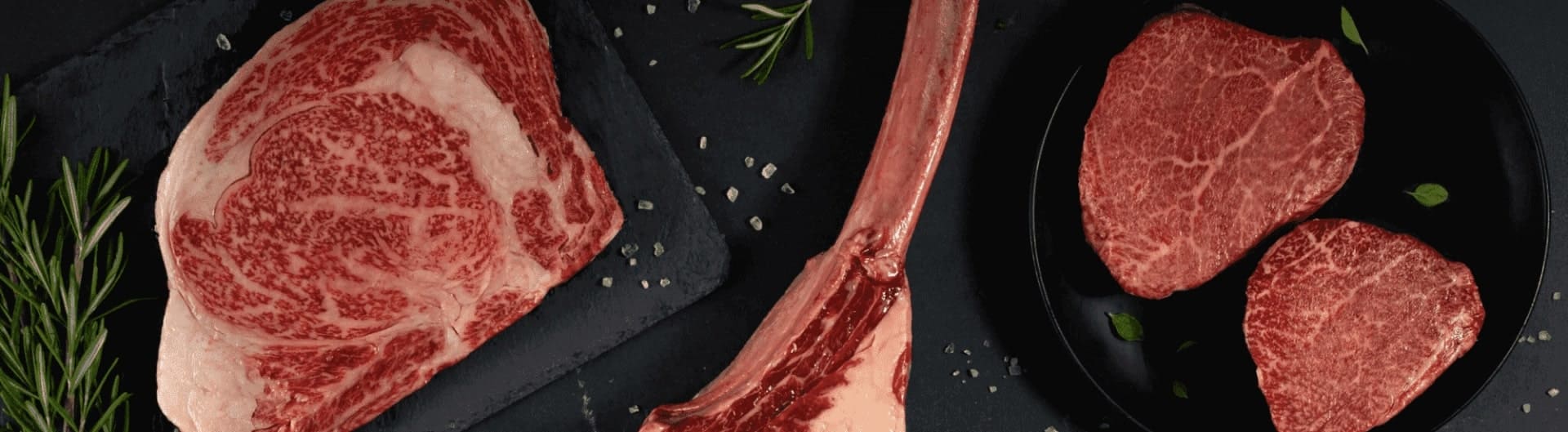
What is Australian Wagyu filet?
Australian wagyu filet comes from the tenderloin, the least-worked muscle on the animal. That’s why it’s naturally tender. It’s also a leaner cut, so it relies on correct cooking technique more than heavy marbling. With Australian Wagyu, you still get a premium texture and better moisture retention than conventional filet.
Australian Wagyu filet vs ribeye vs striploin
- Filet: most tender, leaner, mild flavor, best with a hard sear and quick finish
- Striploin: more beef flavor, firmer bite, fat cap renders into a crisp edge
- Ribeye: richest, most marbled, softer texture
If you want “luxury tender” without a heavy finish, australian wagyu filet is the cleanest option.
How to cook Australian Wagyu filet
Filet is lean, so you want a fast, hot sear and careful doneness control.
- Thaw in the fridge overnight (sealed).
- Pat dry and salt well.
- Sear hard in cast iron or on a hot grill.
- Add butter at the end (optional) and baste briefly.
- Rest, then slice.
Pan tip: use butter late. Early butter can burn during a hard sear.
Best doneness and temperature
Most people like australian wagyu filet best at medium-rare.
- Pull at 120-125F for medium-rare, rest 8-10 minutes
- Prefer a firmer bite? Pull 130F for medium
Avoid well-done with filet because it dries out faster than fattier cuts.
Sauce and finishing ideas
Filet has a mild flavor. Simple upgrades work best:
- Flaky salt + pepper
- Butter + garlic + thyme baste (last 60-90 seconds)
- Light pan sauce from drippings
Skip heavy marinades. They cover the point of the cut.
Thawing and storage
- Best: fridge thaw overnight on a tray
- Faster: cold-water bath while sealed, change water every 30 minutes
- Avoid hot water and microwaving because the edges start cooking first